
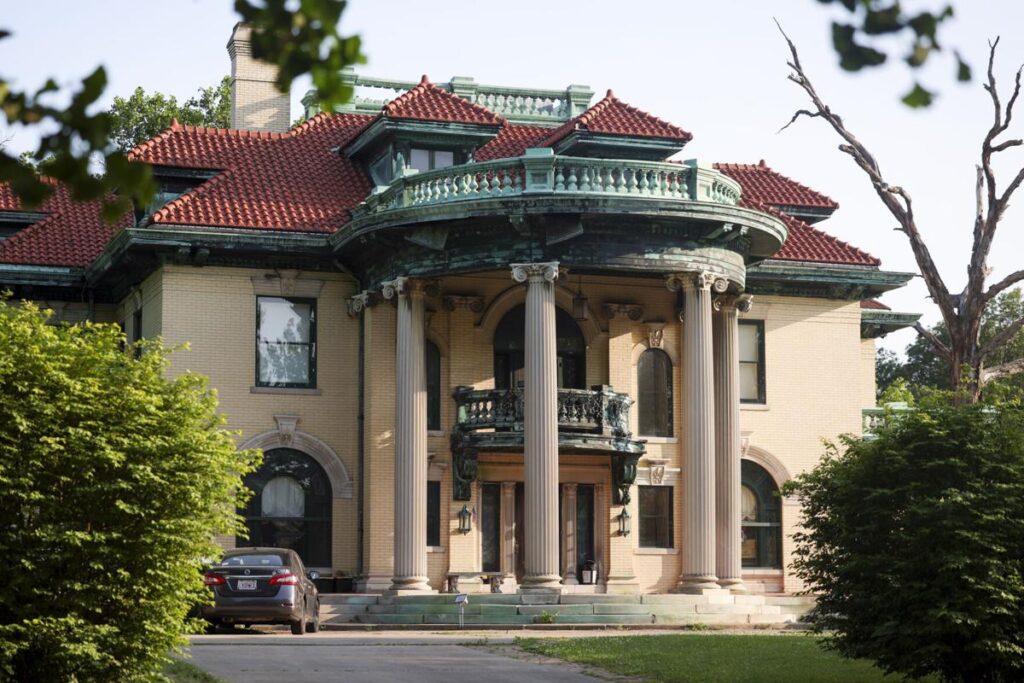
The Powers Mansion in Decatur has a new owner. In early October 2026, it was reported that the historic mansion at 357 West Decatur Street had sold, and that the Decatur City Council voted in favor of converting it into an event venue. History of the Heartland, the local preservation group that has followed the property closely, said the house still needs major repairs, starting with a new roof, and that it will likely be a few more years before it opens as an event center.
For a lot of Decatur residents, this is simply good news about a building they love. For anyone who invests in real estate, the mansion’s last few years are also one of the clearest local case studies in what restoring an old property really takes.
BACH isn’t involved in this sale. But we restore and manage older properties in Decatur every year, and the Powers Mansion story lines up with almost every lesson we’ve learned doing it.
A Quick History of the Powers Mansion
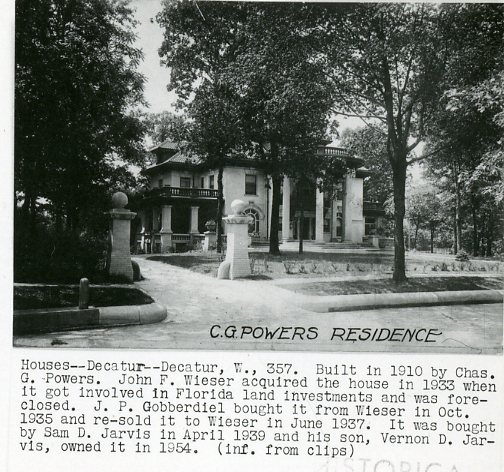
Charles and Effie Powers built the mansion in 1909. It’s a three-story, roughly 7,700-square-foot home on a lot of more than an acre, with a third-floor ballroom. Over the years it has also been known as the Powers-Jarvis Mansion, after a later owner, and it went through a full restoration under the Bachrach family starting in the late 1980s.
By 2023, the house had fallen on hard times. It went to auction twice that summer, sold “as-is” to a buyer who couldn’t see the interior first, and then took months of court proceedings before the new owner could get inside. That owner repaired a hole in the roof, removed a dead tree believed to have caused the damage, and opened the house to the public in May 2024. Nearly 1,000 people showed up. The mansion went back on the market in 2025, and it has now sold again with a new purpose in mind.
Lesson 1: An Old Building Needs a Plan, Not Just a Buyer
The Powers Mansion has changed hands several times in a few years. What’s different now is a clear plan for how the building will be used, and city approval for that plan.
That’s called adaptive reuse: giving an old building a new purpose that pays for its upkeep. A seven-bedroom mansion is expensive to keep as a single-family home. As an event venue, it can earn its keep. As a History of the Heartland leader put it, the change gives the mansion a new purpose.
We think about every property the same way. Before BACH buys anything, the question isn’t “Is this a nice building?” It’s “What will this building do, and will that cover what it costs to own?”
Lesson 2: “As-Is” Means As-Is, and Cash Means Cash
The 2023 auction is a cautionary tale. The first winning bid was more than $300,000, but the sale fell apart a day later because the auction terms required cash at closing and the buyer had expected time to arrange a loan. The house was auctioned again, and the second sale went through for far less.
Two takeaways for any investor:
- Read the terms before you bid. Auction and “as-is” sales often mean no inspection, no financing contingency, and a short window to pay.
- Line up your capital first. The best deal in town doesn’t help you if you can’t close on it.
Lesson 3: Deferred Maintenance Compounds
A grand house doesn’t decline all at once. A tree dies. A roof gets damaged. Water gets in. A few years later, a property that was beautifully restored needs major structural work.
Even after the 2023 roof repair, the mansion still needs a new roof today. That’s how deferred maintenance works: every year a problem waits, it gets bigger and more expensive.
The same principle drives how we run our books. Small issues caught monthly stay small, which is why we reconcile every account every single month. Properties work the same way.
Lesson 4: Real Restoration Takes Years, So Budget for It
The new owner isn’t expected to open the event venue for a few more years. That’s realistic. Restoring a historic property means permits, specialized trades, surprises inside the walls, and work that can’t be rushed.
When we look at a restoration, we plan for:
- Time: a realistic schedule, plus extra for what nobody can see yet
- Reserves: cash set aside for the surprises that always show up
- Holding costs: taxes, insurance, and utilities while the property earns nothing
Underestimating any of those is how good projects stall.
Lesson 5: Some Properties Carry Community Value
Nearly 1,000 people lined up to walk through a house with a damaged roof. That tells you something: people in Decatur care about these buildings.
Restoring a property that a community cares about creates value that doesn’t show up on a balance sheet. It’s the same reason we were proud of the Unit 6 renovation at 228 Main St. A building that’s cared for makes the whole block better, and a restored landmark makes the whole city better.
What This Means for Decatur
A restored Powers Mansion hosting weddings and community events would bring new visitors and new spending to the neighborhood near downtown Decatur. It’s one more sign that investors and residents are betting on the city’s historic buildings instead of letting them go.
We’re rooting for it. And we’re glad to see more people doing the slow, careful work of bringing old Decatur properties back.
Want to Be Part of Restoration Without Running It Yourself?
You don’t have to buy a mansion to invest in Decatur’s comeback. BACH investors own shares of specific restored rental properties, with the work handled for them. See how passive real estate investing with BACH works.
Ready to talk? Contact us here.
All investments carry risk, including loss of principal. Past performance does not guarantee future results. This article is for general information and is not investment, tax, or legal advice. BACH is not affiliated with the sale or ownership of the Powers Mansion.
